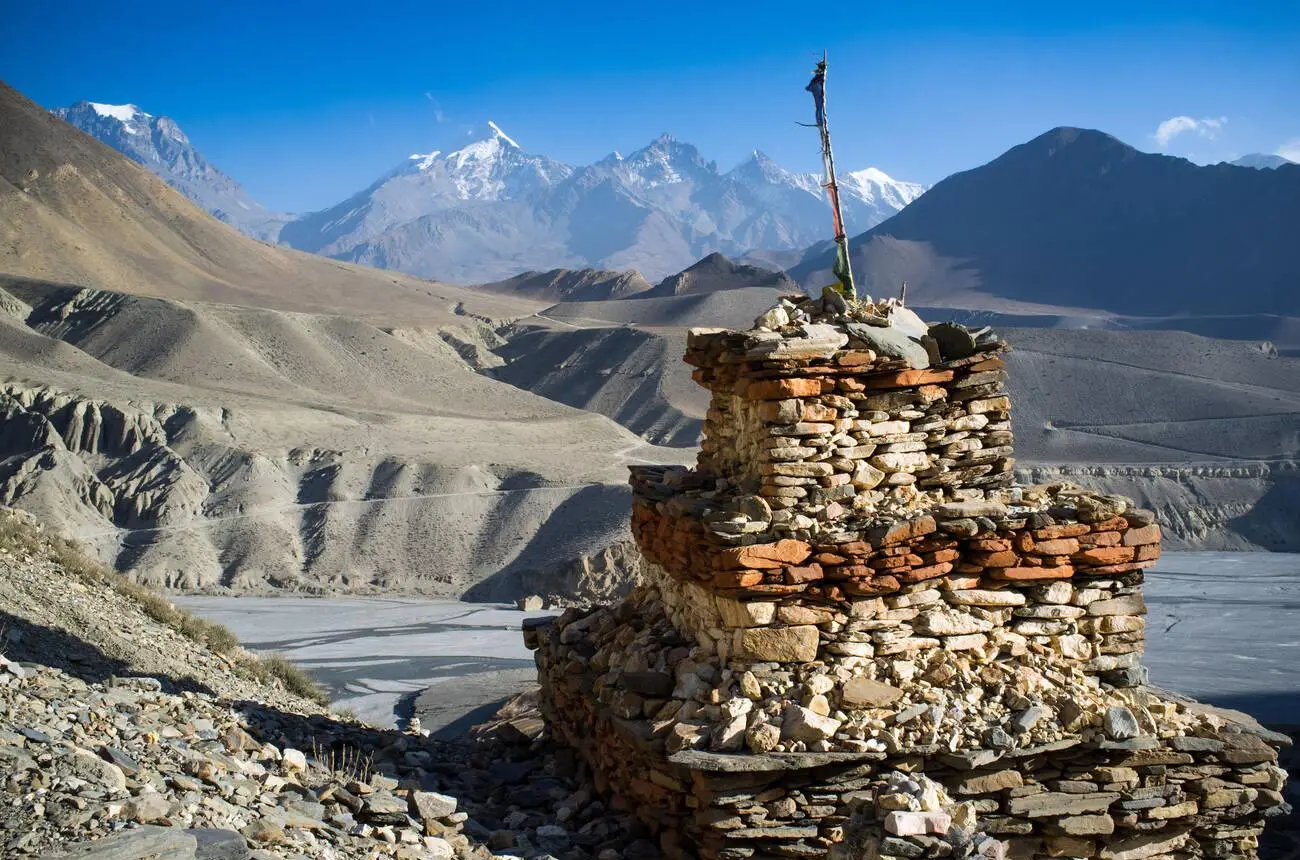
The Lower Mustang Trek is a journey into one of Nepal’s most remote and culturally rich regions. Often referred to as the “Hidden Kingdom,” Mustang was a restricted area until 1992, which has helped preserve its unique Tibetan-influenced culture, traditional villages, and stunning landscapes. The trek takes you through arid landscapes, deep gorges, and the trans-Himalayan region, offering breathtaking views of snow-capped peaks and desert-like terrain. With its ancient monasteries, chortens, and caves, Mustang is truly a living museum of Tibetan Buddhism.
The trek begins in the picturesque city of Pokhara or Jomsom and gradually ascends to the sacred site of Muktinath, where trekkers can witness vibrant religious ceremonies and panoramic mountain views. The Lower Mustang Trek is a perfect blend of adventure, culture, and natural beauty. Whether it’s wandering through walled villages like Kagbeni or exploring high desert plateaus, the experience is immersive and transformative. Travelers can also enjoy interactions with local Thakali communities, experiencing their customs, festivals, and daily life, which makes this trek a truly enriching cultural journey.
The best seasons to undertake the Lower Mustang Trek are spring (March to May) and autumn (September to November). During these months, the weather is stable, skies are clear, and the temperature is moderate, making trekking conditions ideal. Spring offers vibrant rhododendron blooms along lower trails, while autumn provides crisp air and spectacular views of Annapurna and Dhaulagiri ranges.
Winter can be cold and dry, especially at higher altitudes, but it offers fewer crowds and clear skies, perfect for photography. Summer, however, coincides with the monsoon, bringing heavy rains to Nepal, which can make trails slippery and limit visibility of mountain peaks. Lower Mustang’s semi-arid climate, though less affected by heavy rainfall than other regions, still experiences occasional rain and cold winds in monsoon months, so trekking outside peak seasons requires careful preparation.
Seasonal tips:
The Lower Mustang Trek is considered moderate in difficulty, making it suitable for beginners with a reasonable fitness level, as well as experienced trekkers seeking a cultural adventure. The trek involves gradual ascents and descents, with the highest point being Muktinath (3,900m / 12,792ft). Acclimatization is important, and Mountain King Adventures ensures adequate time for trekkers to adjust to higher altitudes, reducing the risk of altitude sickness.
Transportation for the trek is convenient and scenic. Most trekkers start with a short flight from Pokhara to Jomsom (25 minutes), which offers stunning aerial views of the Annapurna and Dhaulagiri ranges. Roads to Jomsom are also an option via a 6–8 hour drive, but flights save time and offer a more comfortable experience. On the trek, all movement is on foot, as motorized vehicles are prohibited in most parts of Lower Mustang, preserving the region’s natural and cultural environment.
Key points:
Food and accommodation on the Lower Mustang Trek are simple but comfortable, mostly in local lodges (tea houses) along the trail. Lodges typically offer basic Western and Nepali meals, such as dal bhat (rice and lentils), noodles, soups, and occasional continental dishes. Fresh water is available but it’s recommended to carry purification tablets or a filter. Snacks and energy bars can be purchased at major stops like Jomsom or Kagbeni.
Accommodation ranges from modest homestays to standard lodges, usually providing warm blankets, hot showers (where available), and private or shared rooms. Staying in these lodges offers an authentic experience, allowing trekkers to interact with locals and learn about their way of life. Mountain King Adventures carefully selects lodges to ensure comfort, hygiene, and cultural immersion throughout the trek.
Highlights:
Permits are mandatory to enter the restricted region of Lower Mustang, and Mountain King Adventures handles all the permit arrangements to simplify your trekking experience. Trekkers require the Restricted Area Permit (RAP) and a TIMS card (Trekkers’ Information Management System). The RAP ensures controlled tourism, preserving Mustang’s cultural and environmental heritage, while TIMS is a standard requirement for all trekkers in Nepal.
Obtaining permits independently can be complicated, but Mountain King Adventures provides a hassle-free service, including application, payment, and submission of passport copies. Foreign trekkers are also advised to carry multiple passport photos for permit processing, though your trekking company usually takes care of this. Permit fees vary depending on nationality and duration of stay, and all trekkers must present permits at checkpoints along the route.
Permit essentials:
Choosing Mountain King Adventures for the Lower Mustang Trek ensures a safe, well-organized, and unforgettable experience. The company provides experienced guides familiar with Mustang’s terrain, culture, and local customs. They handle logistics, including permits, accommodation, transportation, and meals, allowing trekkers to focus entirely on the adventure and cultural immersion.
Mountain King Adventures emphasizes responsible and sustainable tourism. Their guides ensure minimal environmental impact, respect local traditions, and promote interaction with communities in a culturally sensitive way. Trekkers also benefit from expert advice on acclimatization, trekking pace, and safety, which is particularly important in high-altitude regions like Muktinath. Overall, the Lower Mustang Trek with Mountain King Adventures combines adventure, spirituality, and cultural discovery in a seamless and enjoyable journey.
Reasons to choose Mountain King Adventures:
Upon arrival at Tribhuvan International Airport in Kathmandu, our friendly representative from Mountain King Adventures will greet you and escort you to your comfortable hotel. Take some time to relax after your flight and adjust to the altitude and surroundings. In the evening, there will be a welcome briefing where our trekking team will provide a detailed overview of the Lower Mustang Trek, discuss the itinerary, and answer any questions you may have. This day allows you to settle in, explore nearby streets, and enjoy traditional Nepali cuisine at a local restaurant.
Today, you will explore the rich cultural heritage of the Kathmandu Valley. Our guide will take you to UNESCO World Heritage Sites, including Swayambhunath Stupa (Monkey Temple), Durbar Square, and the famous Pashupatinath Temple. These visits offer a glimpse into Nepal’s history, architecture, and spiritual traditions. After sightseeing, the afternoon will be dedicated to trekking preparation. This includes checking your gear, purchasing any last-minute supplies, and ensuring your luggage is ready for the journey ahead. In the evening, you can enjoy a traditional Nepali dinner while discussing trekking tips with your guide.
After breakfast, embark on a scenic drive of approximately 6–7 hours from Kathmandu to Pokhara. The route passes through lush valleys, terraced farmland, and small villages, offering glimpses of rural Nepali life. Arrive in Pokhara, a serene city nestled beside Phewa Lake, and check into your hotel. You can spend the evening strolling along the lakeside, visiting the local market, or relaxing while enjoying panoramic views of the Annapurna and Dhaulagiri mountain ranges. This day is crucial for rest and acclimatization before the flight to Jomsom.
A short, 25-minute flight from Pokhara to Jomsom offers breathtaking views of the Himalayan peaks, deep gorges, and winding rivers. Upon landing in Jomsom, begin your trek toward the traditional village of Kagbeni. The trek is approximately 3 hours and follows the Kali Gandaki River, passing through arid landscapes and small settlements. Kagbeni, with its ancient monasteries and stone houses, is considered the gateway to Upper Mustang. Overnight stays at a lodge allow you to experience local hospitality and prepare for the higher altitude trekking ahead.
Today’s trek to Muktinath is moderately challenging but incredibly rewarding, taking you through a semi-desert landscape with spectacular views of Nilgiri and Dhaulagiri peaks. The trail follows the Kali Gandaki Gorge and passes small villages, prayer wheels, and mani walls, offering a deep cultural experience. Arrive at Muktinath, a sacred pilgrimage site revered by both Hindus and Buddhists. Here, you can explore the temple complex and experience the spiritual atmosphere. Overnight at a local lodge allows you to rest and recover from the day’s trek while enjoying authentic Mustang cuisine.
Spend the day exploring the religious and cultural highlights of Muktinath. Visit the Muktinath Temple, known for its 108 sacred water spouts, and the nearby monastery, witnessing the daily rituals of the monks. Take in the panoramic mountain views and the unique desert landscape of Mustang. The afternoon can be spent hiking to nearby viewpoints or interacting with locals to learn about their traditions and lifestyle. This day provides both spiritual enrichment and an opportunity for photography, capturing the essence of Mustang’s ancient culture and breathtaking scenery.
Begin the return trek to Jomsom, descending gradually through the Kali Gandaki valley. The trail passes several charming villages and offers spectacular vistas of the Annapurna and Dhaulagiri ranges. The trek typically takes around 6 hours, allowing for a steady pace with regular breaks for refreshments and photos. Arrive in Jomsom by late afternoon, where you can enjoy a relaxing evening at a lodge, reflecting on the experiences and landscapes you’ve encountered. The rest and warm meals here are a perfect reward after several days of trekking.
Board a scenic morning flight back to Pokhara. Upon arrival, enjoy free time to explore the city or relax at your hotel. Optional activities include a boat ride on Phewa Lake, visiting the World Peace Pagoda, or strolling through the vibrant local market. This day is designed to let your body recover from the trek while soaking in Pokhara’s peaceful atmosphere. In the evening, the group can gather for a farewell dinner to celebrate the successful completion of the Lower Mustang Trek.
Drive back to Kathmandu via the picturesque highway, passing through rivers, hills, and quaint villages. The journey offers plenty of opportunities for photography and short stops to stretch and enjoy the scenery. Arrive in Kathmandu by late afternoon and check into your hotel. Spend the evening exploring Thamel, a bustling neighborhood filled with shops, cafes, and local restaurants. This final night in Kathmandu allows for shopping, packing, and reflecting on the unique experiences of the trek before your departure.
After breakfast, transfer to Tribhuvan International Airport for your flight home. Our team at Mountain King Adventures ensures all logistics are smooth, helping with luggage and departure formalities. Carry memories of the majestic landscapes, rich culture, and spiritual experiences of Lower Mustang, a journey few have the opportunity to witness. This marks the conclusion of an unforgettable adventure in the heart of Nepal’s hidden kingdom.
Clothing
Handwear
Footwear
Gear
Miscellaneous
The Lower Mustang Trek is considered moderate to challenging, so a reasonable level of physical fitness is recommended. Trekkers should be comfortable with long hours of walking on uneven and rocky terrain, sometimes at high altitudes exceeding 3,500 meters. Regular cardiovascular exercises, hiking practice, and stamina-building activities prior to the trek will be highly beneficial. Mountain King Adventures also advises pacing yourself during the trek, staying hydrated, and allowing your body to acclimatize gradually to prevent altitude-related issues.
Altitude sickness can be a concern due to the trekking elevations, especially near Muktinath at 3,900 meters. Symptoms can include headaches, nausea, fatigue, and dizziness. Mountain King Adventures prioritizes safety by allowing gradual acclimatization, providing advice on hydration, nutrition, and rest, and adjusting the trekking pace as needed. Trekkers are encouraged to inform guides immediately if they feel unwell. In serious cases, descending to lower altitudes is the most effective remedy, and our experienced guides are trained to manage such situations safely.
The ideal time for trekking Lower Mustang is during the spring (March to May) and autumn (September to November) seasons. During these months, the weather is generally stable with clear skies, offering spectacular views of the Himalayan peaks. Spring brings colorful rhododendron blooms along the trail, while autumn provides crisp air and excellent visibility. Monsoon season (June to August) is not recommended due to heavy rainfall, landslides, and slippery trails, whereas winter can be extremely cold with potential snow blocking certain routes.
Yes, trekking in Lower Mustang requires a special restricted area permit in addition to the standard Annapurna Conservation Area Permit (ACAP). These permits are mandatory for all foreign nationals and are issued to help protect the fragile culture, heritage, and environment of Mustang. Mountain King Adventures handles all the necessary permit arrangements for trekkers, ensuring you comply with local regulations. Carrying these permits with you during the trek is essential, as park officials may check them at checkpoints along the route.
Accommodation during the Lower Mustang Trek is primarily in cozy lodges and tea houses along the trail. These lodges offer basic but comfortable facilities, including warm bedding, shared or private bathrooms, and meals. Although facilities are simpler compared to urban hotels, they provide a welcoming and homely atmosphere with local hospitality. In larger villages like Jomsom and Kagbeni, lodges may offer additional amenities such as Wi-Fi, charging points, and hot showers. Mountain King Adventures carefully selects lodges that ensure both comfort and cultural authenticity.
Meals during the trek are a mix of traditional Nepali dishes and familiar international cuisine. Trekkers can enjoy staples like dal bhat (lentil soup with rice), momo (dumplings), noodles, and soups. Many lodges also serve vegetarian and vegan options, and hot beverages like tea, coffee, and soups are readily available. Mountain King Adventures ensures that all meals are prepared hygienically, and guides can assist with dietary preferences or restrictions. Eating regularly and maintaining proper hydration is essential for energy and acclimatization during the trek.
It is recommended to pack light, ideally around 10–12 kg for your personal trekking bag. Mountain King Adventures provides porters for heavier luggage if needed, so you only need to carry essentials such as clothing, water, snacks, a camera, and personal items. Layered clothing, a rain jacket, trekking boots, and a hat for sun protection are highly recommended. Packing light ensures comfort during long trekking hours and helps reduce fatigue while maintaining flexibility and mobility on rugged trails.
Packing for the Lower Mustang Trek requires a mix of warm and layered clothing, trekking essentials, and personal items. Key items include waterproof trekking boots, thermal wear, fleece or down jackets, a good-quality rain jacket, sun protection (hat, sunglasses, sunscreen), water bottles, and a basic first-aid kit. A camera or smartphone for photos is recommended, along with a small daypack for trekking essentials. Mountain King Adventures provides a detailed packing list before departure to ensure trekkers are well-prepared for both comfort and safety during the journey.
Yes, trekking in Lower Mustang is generally safe when undertaken with experienced guides and proper preparation. Mountain King Adventures emphasizes safety by providing trained guides, porters, and support staff. The region is politically stable, and local communities are friendly and welcoming. However, like any high-altitude trek, risks such as sudden weather changes, altitude sickness, and slips on rocky terrain exist. Following the guidance of your trekking team, staying hydrated, and acclimatizing properly significantly reduce potential risks during the journey.
Mobile networks and internet access in Lower Mustang are limited and unreliable in remote areas. Some lodges in larger villages like Jomsom, Kagbeni, or Muktinath may offer Wi-Fi or mobile signal, but speeds can be slow. Mountain King Adventures encourages trekkers to use this time to disconnect from digital distractions and fully enjoy the natural beauty, culture, and tranquility of Mustang. Carrying offline maps, essential travel documents, and emergency contacts is recommended, as communication in remote areas may not always be immediately available.